
Info
Official Name : Designmuseum Danmark
Address : Bredgade 68, 1260 København K, Denmark
Type : National Design Museum (Former Frederiks Hospital)
Year of Completion : 1757 (Hospital) / 1926 (Converted to Museum)
Architects : Nicolai Eigtved, Lauritz de Thurah
Opening Days :
Tuesday – Sunday (Closed on Mondays)
Opening Hours :
10:00 – 18:00 (Extended until 20:00 on Thursdays)
Admission :
Adults: 130 DKK (approx. $19 / ₩25,000) / Students & Under 26: 90 DKK / Under 18: Free
Visitor Tips :
-The central courtyard, ‘Grønnegården,’ is one of Copenhagen’s most serene hidden gems.
-Visiting the museum cafe’s terrace during sunny weather is highly recommended.
Official Links
Introduction
Designmuseum Danmark is more than a mere repository for design artifacts; it is a living heritage site where the essence of Danish architectural and design history converges. Originally commissioned by King Frederik V in 1757 as Denmark’s first public hospital, the ‘Frederiks Hospital,’ this structure sits at the heart of Frederiksstaden, Copenhagen’s historic Rococo district. It was designed by the preeminent architects of the era, Nicolai Eigtved and Lauritz de Thurah.
In the early 1920s, the building underwent a transformative renovation by architects Ivar Bentsen and Kaare Klint. Klint, revered as the “Father of Modern Danish Design,” established the museum’s identity by designing its bespoke furniture and exhibition systems. The rigorous symmetry and four-wing layout surrounding a central courtyard reflect the archetypal 18th-century European hospital design. Today, this configuration provides an optimized spatial flow for exploring the aesthetics of functionalism. Representing a harmonious dialogue between 18th-century dignity and modern design sensibility, the museum stands as the quintessential starting point for understanding the Danish philosophy of respecting the past while designing for the future.
Architectural History
1752: King Frederik V decrees the establishment of the hospital.
1757: Completion of Frederiks Hospital, the first of its kind in Denmark.
1919: Hospital operations cease; the decision is made to repurpose the site as a museum.
1920–1926: Major renovation led by Kaare Klint and Ivar Bentsen.
1926: The museum opens as the Museum of Decorative Art.
2011: Officially renamed ‘Designmuseum Danmark.’
2020–2022: Extensive restoration of the building’s exterior and interior, along with the renovation of the courtyard garden.
Architectural Features
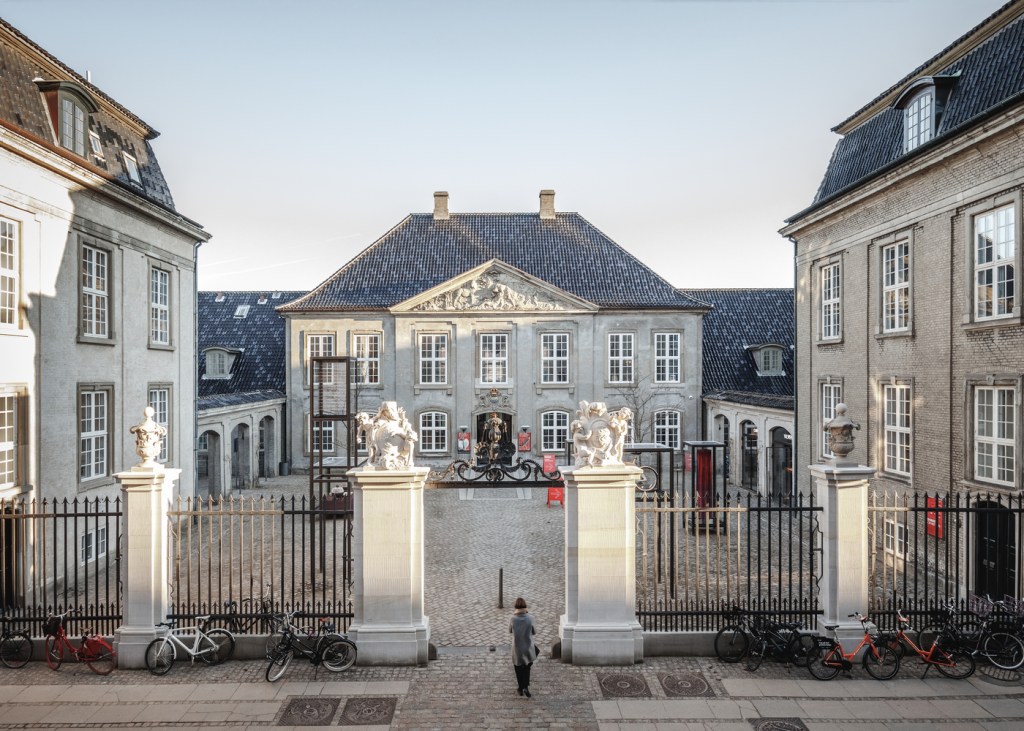
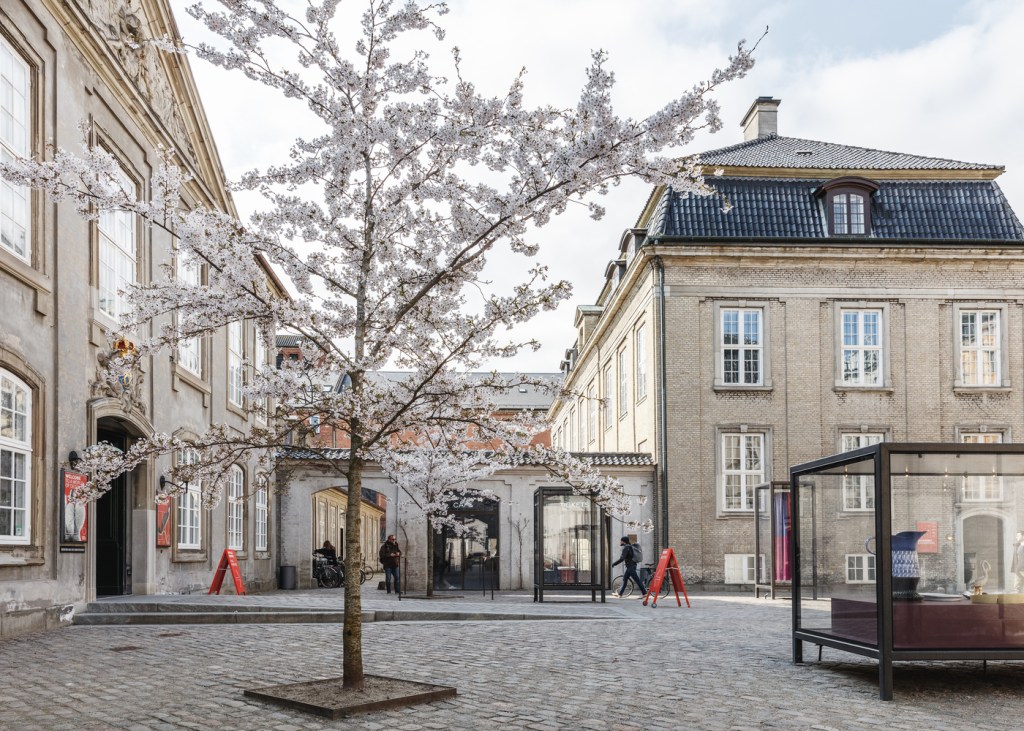
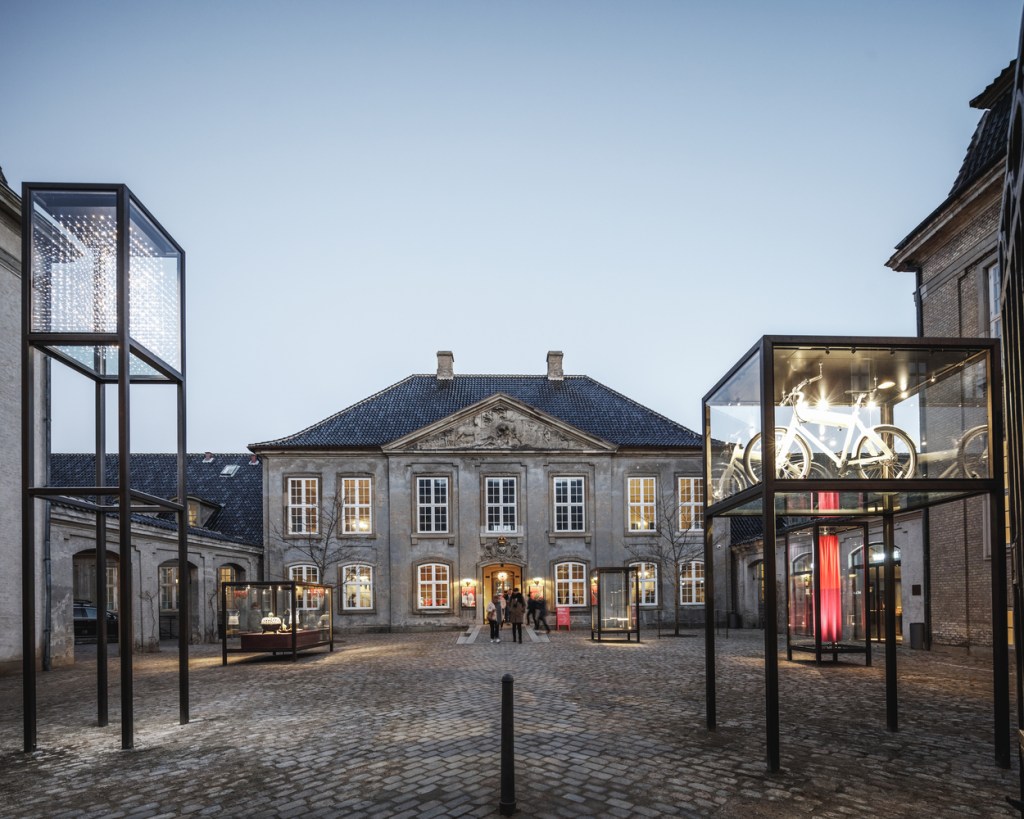
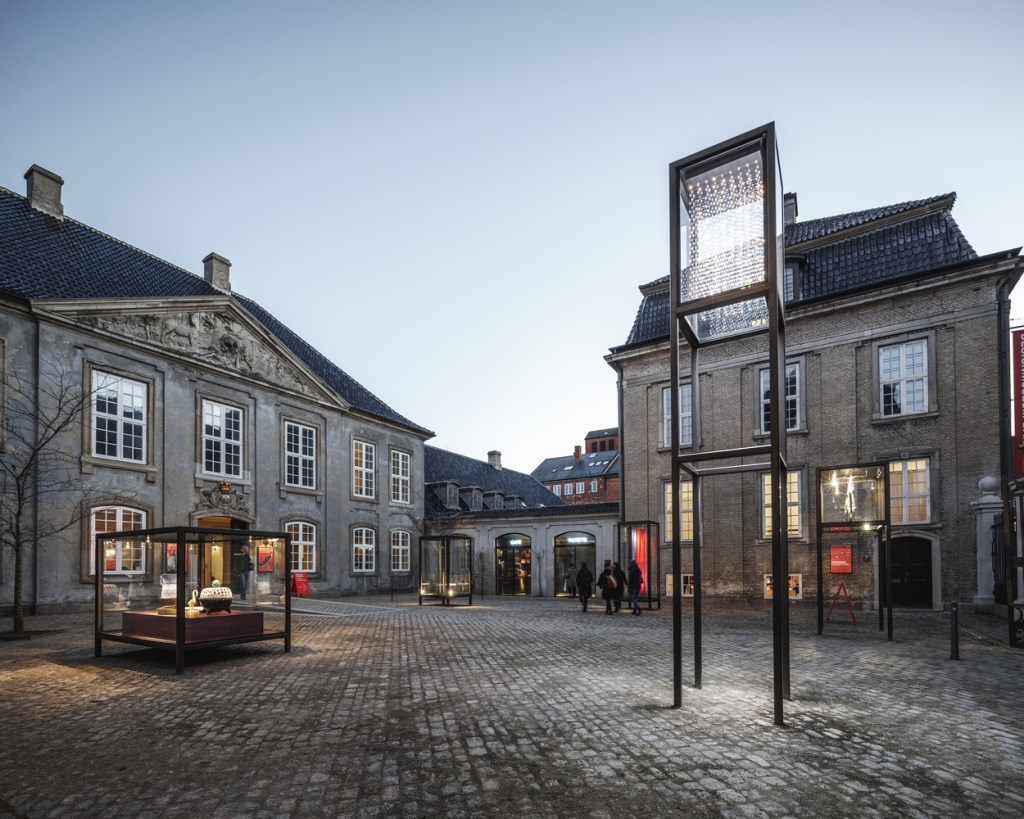
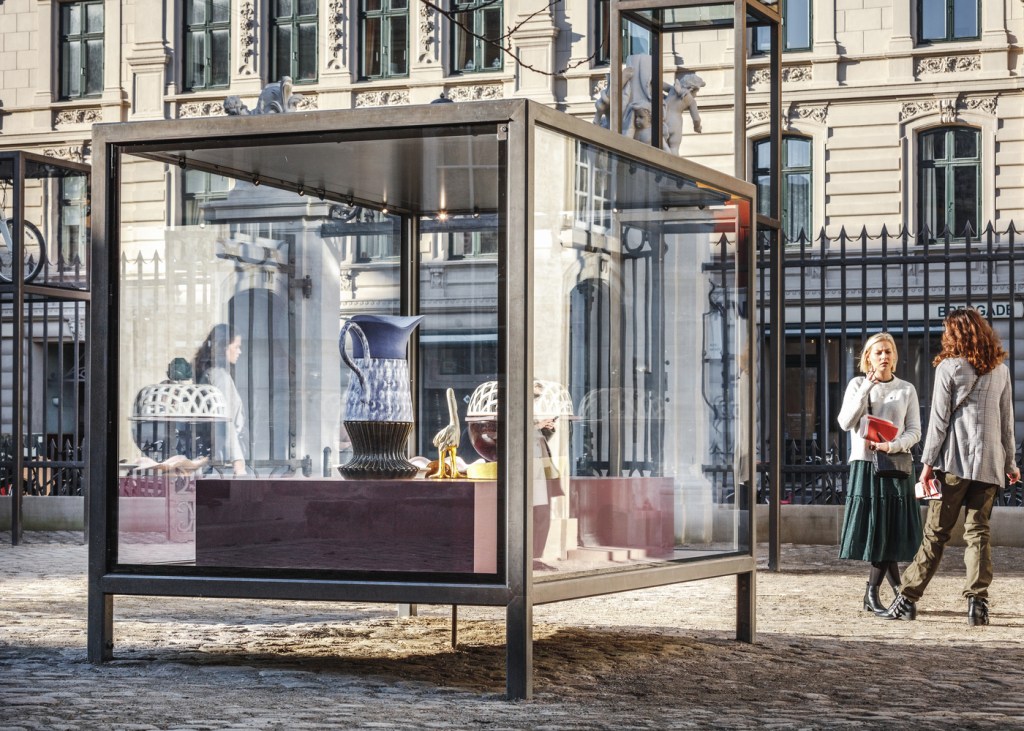
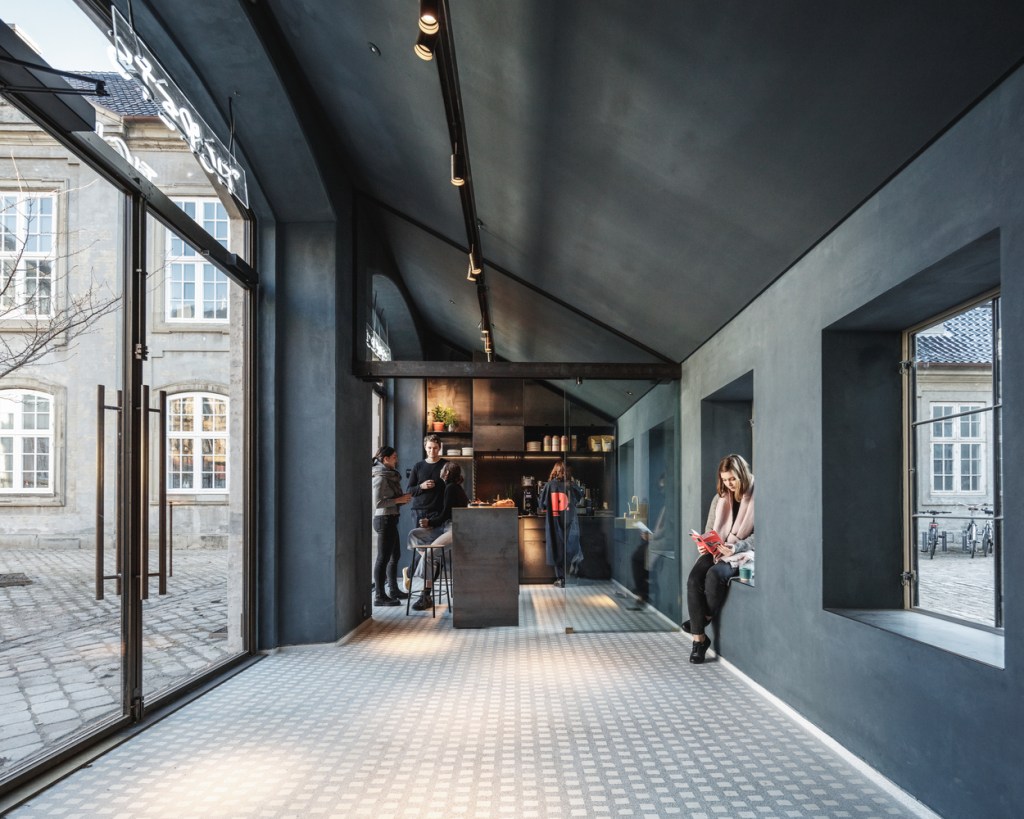
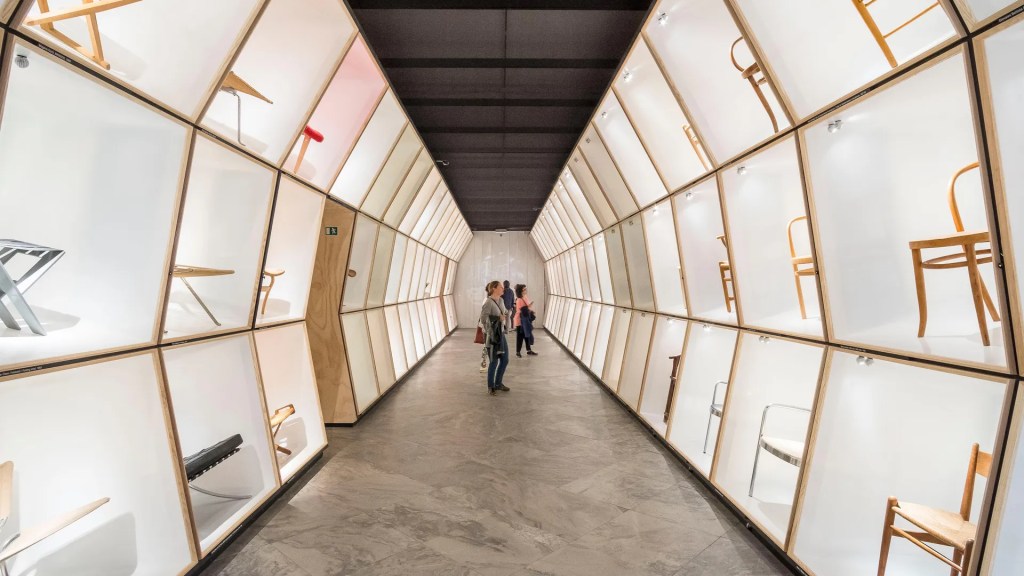
① Rigorous Order of 18th-Century Rococo and Urban Context
The foundation of this building lies in the ‘Frederiks Hospital’ completed in 1757, representing the pinnacle of the Rococo style prevalent in 18th-century Europe. Nicolai Eigtved, who planned the entire Frederiksstaden district, designed the building as a crucial piece of this grand urban puzzle. The structure adopts a courtyard-style plan where four wings perfectly enclose a square inner garden—a result of the extreme pursuit of symmetry and proportion characteristic of 18th-century aesthetics.
Even though it was born during the height of Rococo, the exterior displays a uniquely Danish restraint, diverging from the excessive ornamentation of French Rococo. The harmony of red bricks and yellow sandstone provides visual stability, while the rhythm of the windows emphasizes the building’s horizontality, creating a majestic atmosphere. This architectural rigor was not merely an aesthetic choice but a functional solution for ventilation and hygiene required by a hospital at the time. Despite its conversion into a museum, Eigtved’s robust geometric order serves as a perfect framework for housing a vast design collection. This proves that a strong initial architectural intent can transcend its original purpose to become a universal value.
② Kaare Klint’s Ergonomic Renovation and the Establishment of Functionalism
The renovation in the 1920s was a significant turning point in the history of modern Danish design. Kaare Klint, the “Father of Danish Design,” projected his core philosophy of “human-centered standardization” across the space while preserving the building’s historical bones. Klint redefined the interior furniture and exhibition systems based on mathematical proportions of the human body—measuring heights for reaching objects and angles for sightlines. This work laid the foundation for modern functionalism, asserting that design must stem from practical human needs.
The lighting and wooden furniture within the galleries were meticulously calibrated to account for the visitor’s eye movement and walking pace. By eliminating decorative elements and emphasizing the inherent properties of materials, he created a neutral yet dignified backdrop for the exhibits. Notably, the standardized display cases Klint designed became prototypes for museum exhibition techniques worldwide. Klint’s renovation is regarded as a historical achievement that did more than preserve heritage; it encapsulated the “Danish Design” style within an architectural space by combining ergonomic analysis with aesthetic restraint.
③ Symbolic Emptiness and Spatial Liberation of the Central Courtyard (Grønnegården)
The ‘Grønnegården’ garden, located at the very center of the museum, is the spatial highlight that resolves the building’s architectural tension. This enclosed courtyard, surrounded by heavy stone wings, paradoxically offers visitors a profound sense of visual liberation. Once a green space for healing patients, it has transformed into a public plaza where citizens and artists interact. From an architectural perspective, this garden serves as a ‘void’ between the massive architectural masses, acting as a life-support system that draws in natural light and circulates air.
Walking along the corridors surrounding the garden, the changing seasons are constantly projected into the interior through the windows, creating a unique atmosphere where artificial exhibits coexist with natural vitality. Architecturally, the garden serves as an emotional device that softens rigidity, functioning as a place of healing for visitors experiencing “museum fatigue.” This courtyard, embodying the essence of Danish spatial aesthetics—completing value through emptiness—suggests that a building can be more than a physical structure; it can be the spiritual center of a community.
④ Honesty of Materials and Inheritance of Danish Architectural Tradition
Designmuseum Danmark practices the “honesty of materials” by revealing the essential characteristics of its construction elements. The traditional Danish red bricks used on the exterior represent the historical identity of Copenhagen, adding depth to the building as they weather over time. Inside, Northern European woods like oak and ash are used extensively, providing a warm textural contrast to the cool brick walls. This use of materials reflects the values of authenticity and sustainability that form the backbone of Danish design.
The materials used in the construction minimize artificial processing, encouraging a ‘patina’ that develops naturally over time. The wooden floors and display stands gain a unique luster through the touch and footsteps of countless visitors, reminding us that the building is a living entity. The choice of local natural materials over ornate finishes or high-tech substances is a philosophical decision unique to Scandinavia, seeking harmony with nature to improve the quality of life. The calm harmony created by the colors and textures of the materials provides an optimal environment for visitors to focus on the essence of design.
⑤ Sequential Spatial Structure and the Aesthetics of Visual Transparency
The museum’s layout adopts an ‘Enfilade’ style, where multiple rooms are connected by doors aligned on a single axis. Designmuseum Danmark reinterpreted this into a modern exhibition environment, completing a circular circulation system where the galleries flow seamlessly around the central courtyard. This structure provides intuitive convenience, ensuring visitors do not get lost while maintaining a sequential narrative of design history.
A particularly noteworthy aspect is the visual transparency connecting the indoors and outdoors. Through windows placed throughout the corridors and galleries, the scenery of the courtyard is constantly projected, acting as a bridge that visually connects visitors with galleries on the opposite side. This transparency dispels the authoritative and closed image of a national museum and grants a sense of democratic space open to the public. As natural light creates shifting shadows within the galleries, the architecture itself becomes a moving exhibit, facilitating an invisible dialogue between space, humans, and design heritage.
Source Caption
This information was academically synthesized based on the official records of Designmuseum Danmark, the Kaare Klint Archives, and the Copenhagen Urban Architecture Conservation Database.
 SAYU MAGAZINE
댓글 남기기