
Info
Official Name : Chichu Art Museum (地中美術館)
Address : 3445 Naoshima, Kagawa District, Kagawa 761-3110, Japan
Type : Underground Site-specific Art Museum
Year of Completion : 2004
Architects : Tadao Ando
Opening Days :
Mondays (If Monday is a national holiday, closed the following day), maintenance days.
Opening Hours :
March – September: 10:00 – 18:00 (Last entry at 17:00)
October – February: 10:00 – 17:00 (Last entry at 16:00)
Admission :
– Adults: 2,100 JPY (Approx. $14 – $16 USD / 19,000 – 20,000 KRW depending on exchange rates)
– Ages 15 and under: Free
– Note: Online reservation is mandatory.
Visitor Tips :
– Advanced Booking: As the museum operates on a 100% reservation basis, it is recommended to book 2–4 weeks in advance.
– Timing: The impression of the artworks changes with natural light; midday or the “Open Sky” viewing during sunset is highly recommended.
– Footwear: You must remove your shoes to enter the Claude Monet space, so wearing easy-to-remove shoes is practical.
Official Links
Introduction
The Chichu Art Museum is a masterpiece of sublime modern architecture, quietly submerged beneath the topography of Naoshima, a small island in Japan’s Seto Inland Sea. This museum is the most striking manifestation of the Benesse Art Site Naoshima’s philosophy: “rethinking the relationship between nature and people.” To preserve the beautiful scenery of the Seto Inland Sea, world-renowned architect Tadao Ando took the radical step of burying the entire mass of the building underground. While only geometric openings and pathways are visible from above, the interior offers an overwhelming sense of space that delves deep into the abyss of the earth.
This place functions as a massive piece of Land Art itself, transcending the functional role of a box meant to hold art. From the design stage, the works of three masters—Claude Monet, James Turrell, and Walter De Maria—were organically integrated with the architecture, showcasing the essence of “site-specific” art. Visitors experience a transition of senses from darkness to light and from confinement to openness as they navigate the labyrinthine concrete corridors. The exhibition method, which excludes artificial lighting and relies solely on natural light pouring from the sky, brings the flow of time and seasonal changes directly into the interior. Consequently, the Chichu Art Museum becomes a “living organism” with a different face every moment, serving as a sanctuary of silence that invites visitors to look past material wealth and confront their spiritual essence.
Architectural History
Late 1980s: Soichiro Fukutake and Tadao Ando launched the “Naoshima Project.”
1990s: Completion of Benesse House and other key structures, establishing the foundation of the “Art Island.”
2002: Construction of Chichu Art Museum began, utilizing underground burial methods to minimize environmental impact.
July 2004: Chichu Art Museum opened, featuring the permanent exhibition of five paintings from Claude Monet’s Water Lilies series.
2010–Present: Functions as a core site for the Setouchi Triennale, becoming a pilgrimage site for architects and artists worldwide.
Architectural Features
① The Aesthetics of “Invisible Architecture” Preserving Landforms
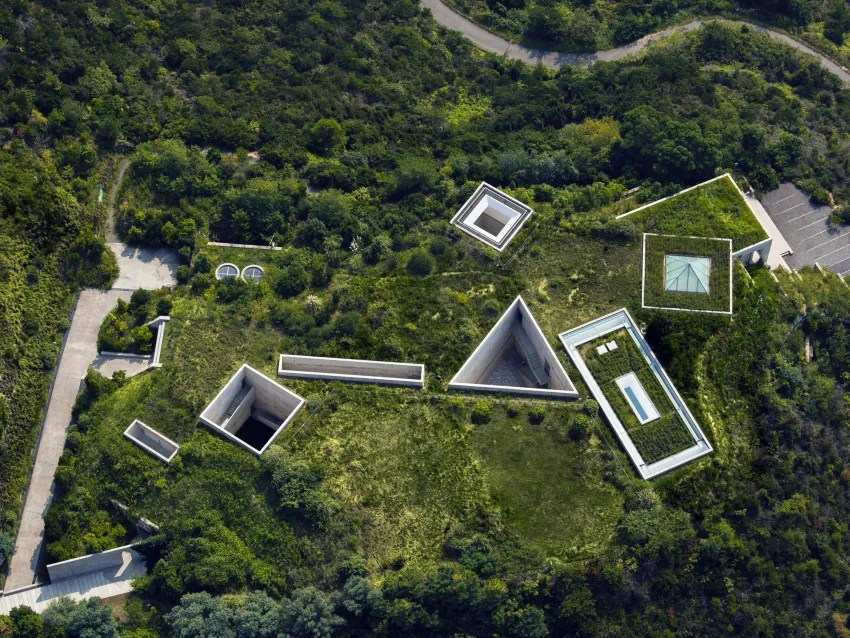
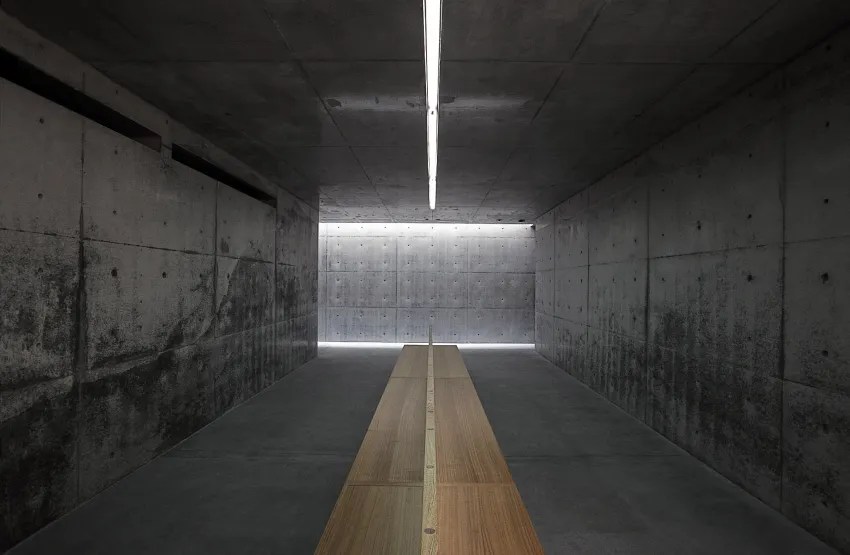
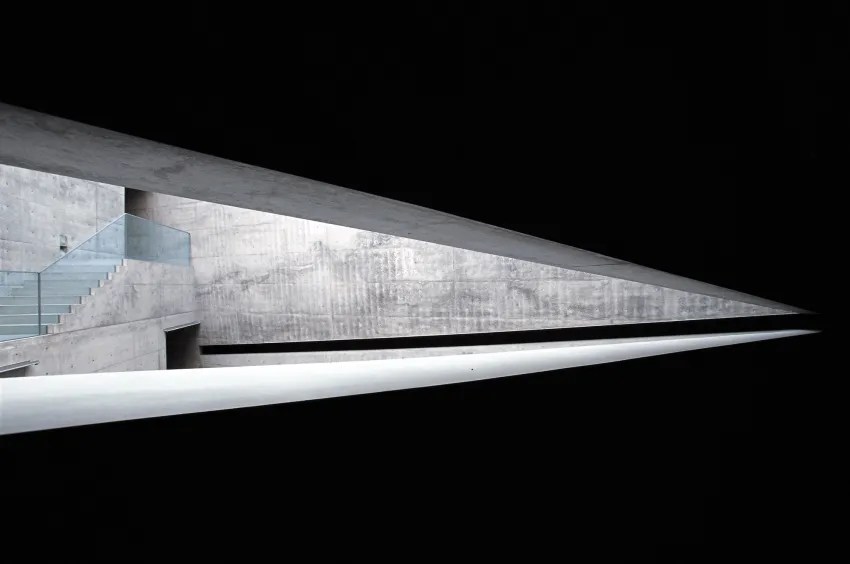
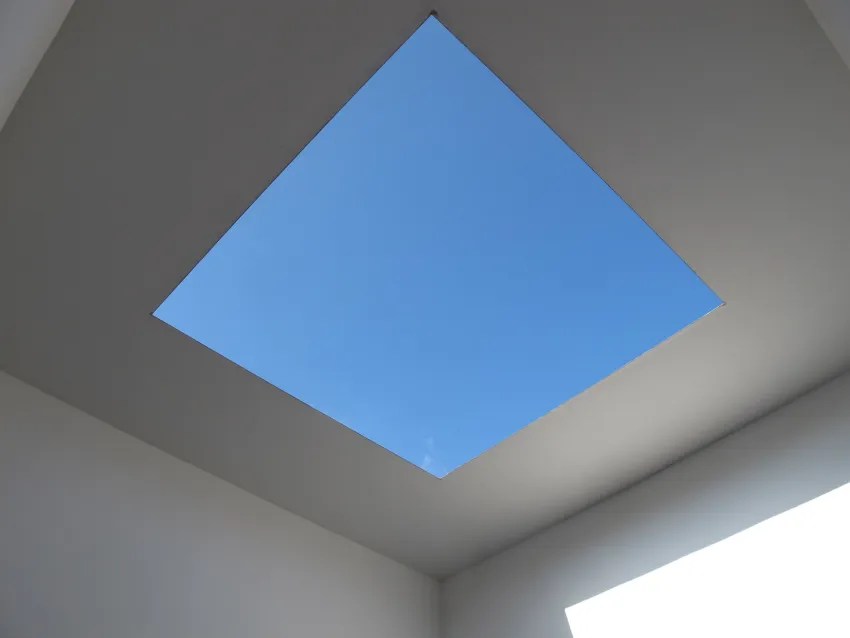
The most defining feature of the Chichu Art Museum is its “underground” structure, where the building does not appear above ground. To avoid disrupting the ridgelines of Naoshima and the harmony of the blue sea, Tadao Ando hid the building beneath the surface. This is the diametric opposite of traditional architecture, which often boasts its visual majesty on the surface. Built into the slope of the hill, the architecture sits quietly beneath the skin of the earth, representing Ando’s Eastern view of nature—that human creations should remain humble before the natural world. From above, only geometric openings like triangles and squares are visible; these serve as channels for the underground space to breathe and as fountains of light. This “invisible architecture” provides visitors with a sense of primal relief and awe, as if entering the womb of the earth, away from the visual noise of daily life.
② The Play of Light and Shadow: A Pure Optical Space Rejecting Artificiality
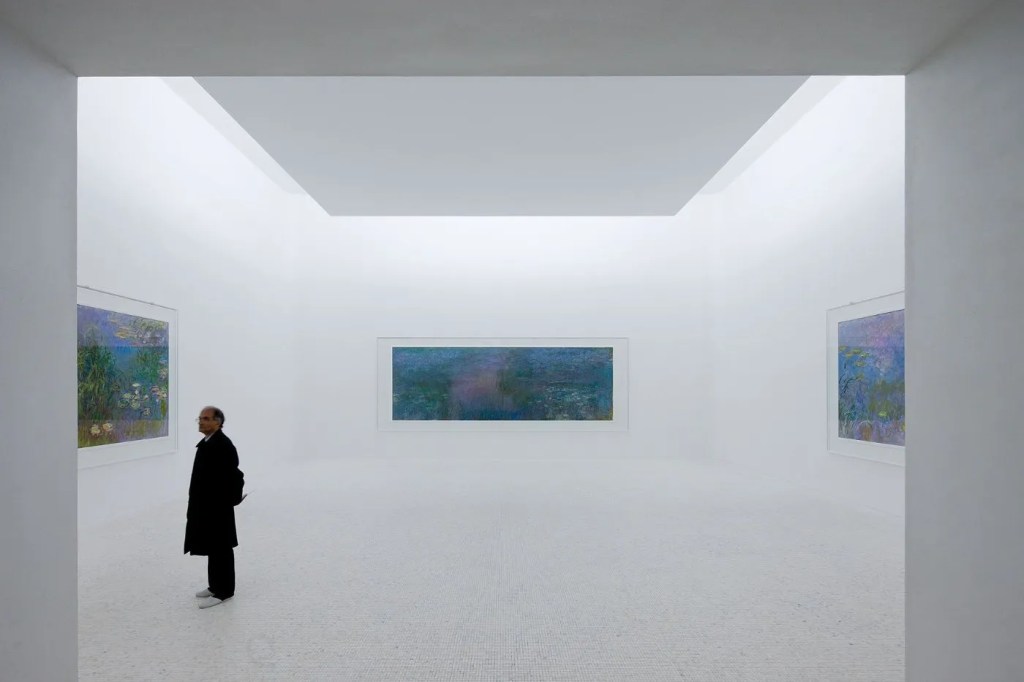
The interior of the Chichu Art Museum uses almost no artificial lighting. All exhibition spaces and corridors are defined by natural light entering through ceiling openings or slits. Ando utilizes light as if it were a construction material, shaping the volume and texture of the space. The Claude Monet Water Lilies gallery is where the power of natural light reaches its zenith. Soft, diffused light pouring from the ceiling perimeter meets a floor made of 2cm white marble fragments, filling the entire space with a dreamlike white glow. This light constantly fluctuates on Monet’s canvases according to the time of day and the movement of clouds. The calm blue light of a rainy day and the intense golden light of a clear day tint the same works with entirely different vitalities. This maximization of contrast between light and shadow heightens the visitor’s visual sensitivity and serves as a philosophical device to visualize the invisible flow of time.
③ Restraint of Exposed Concrete and Geometric Rigor
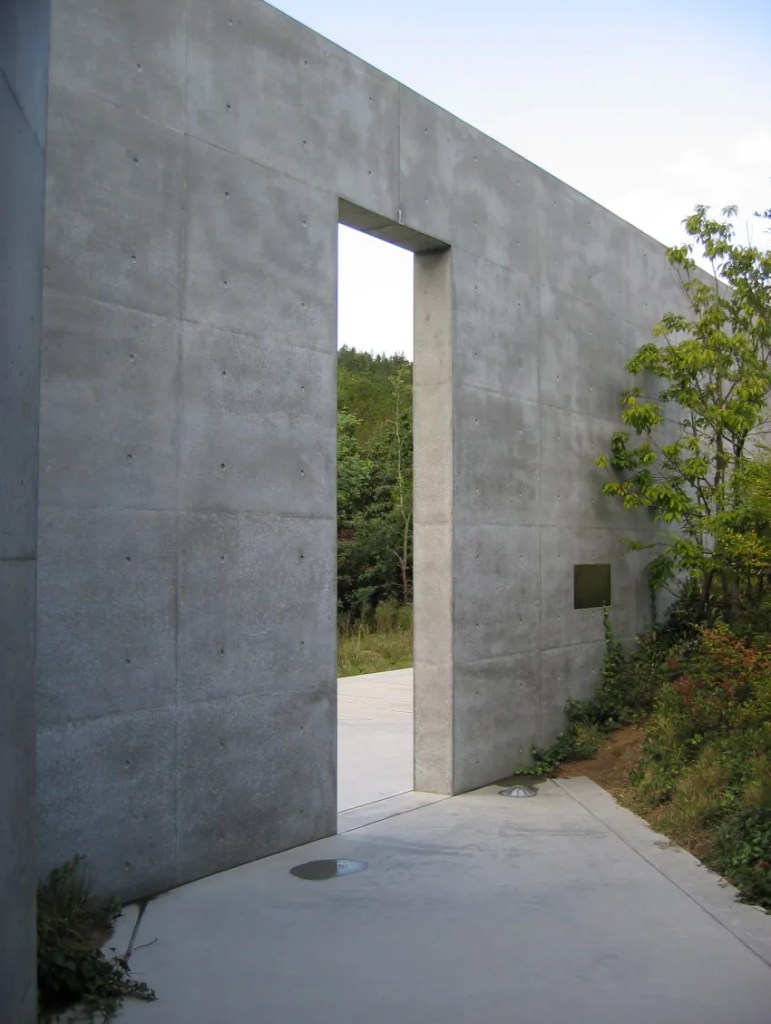
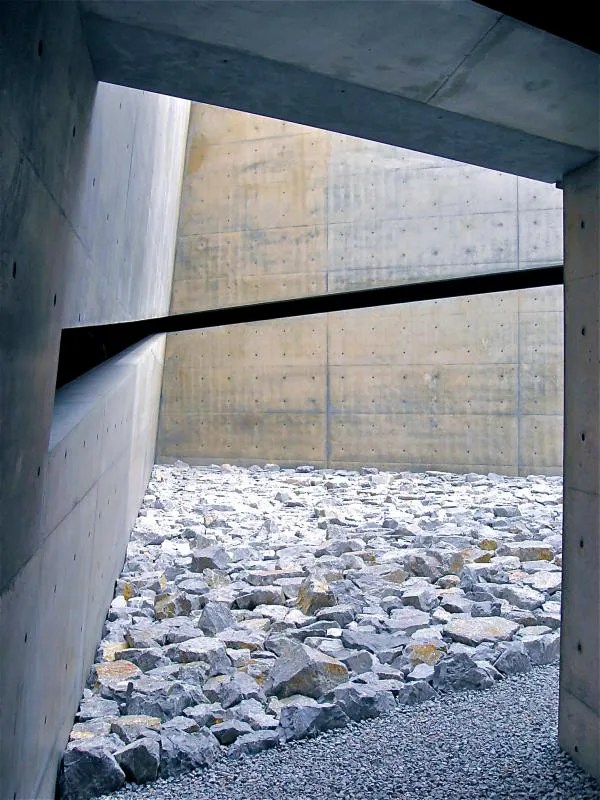
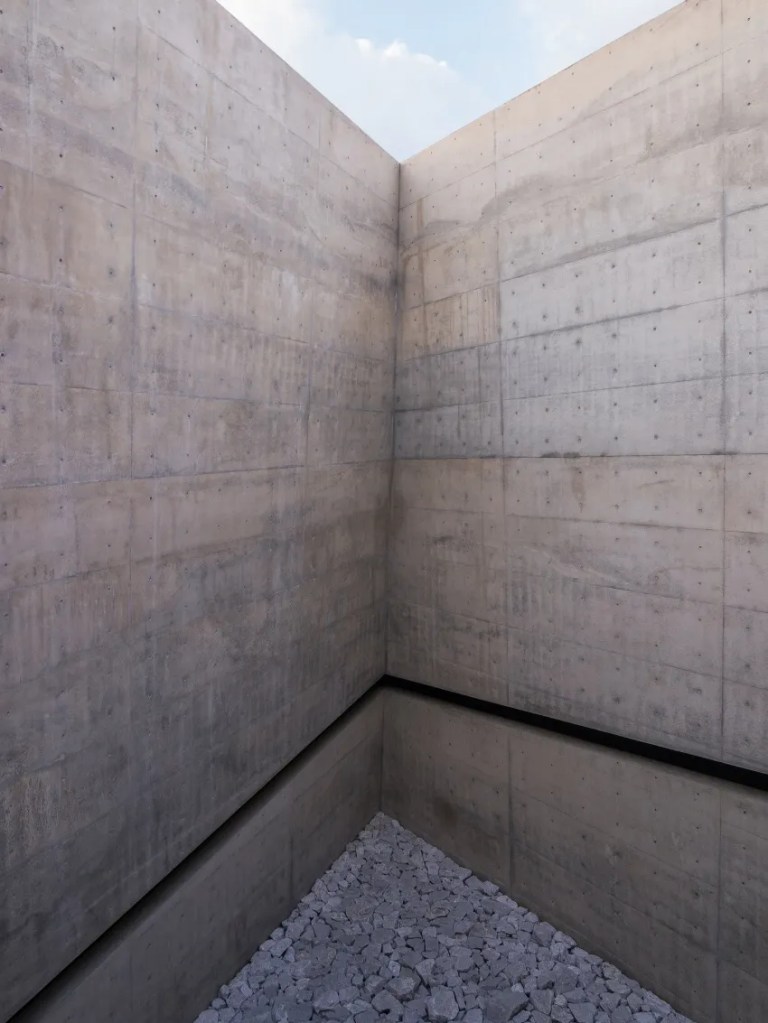
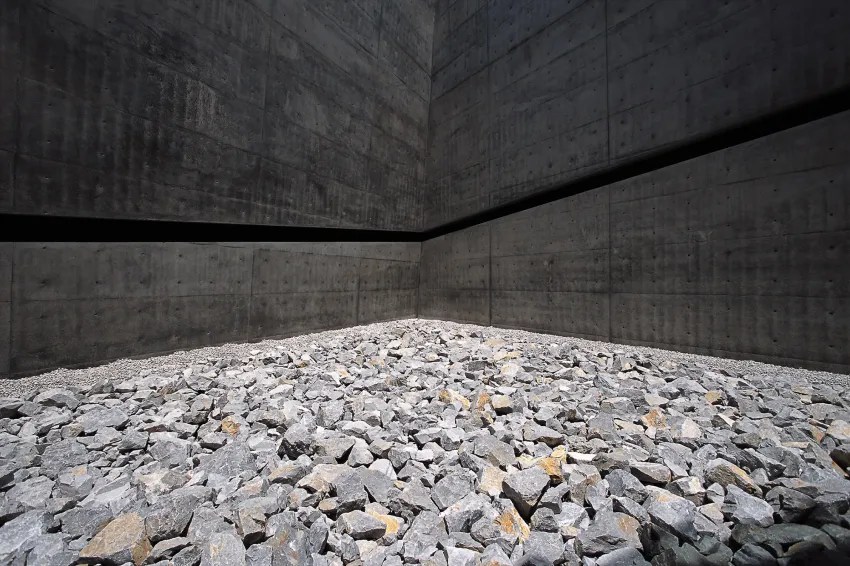
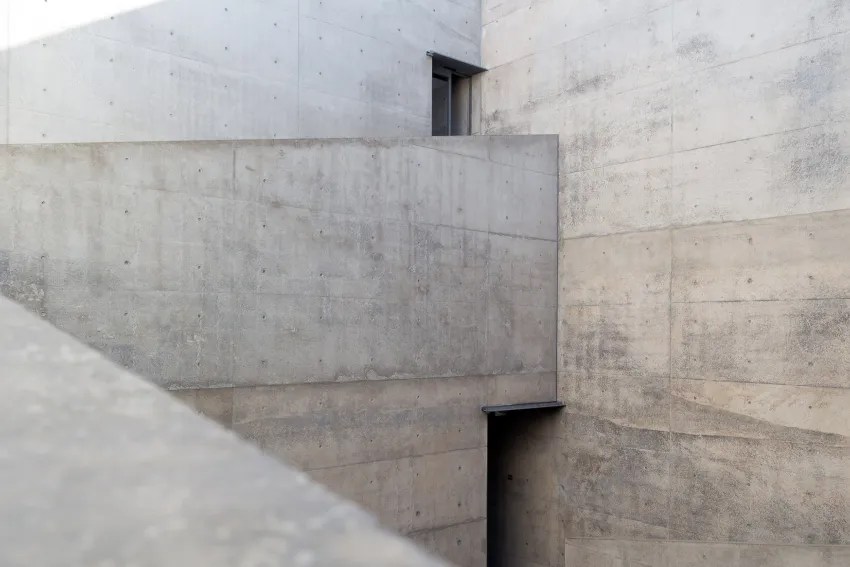
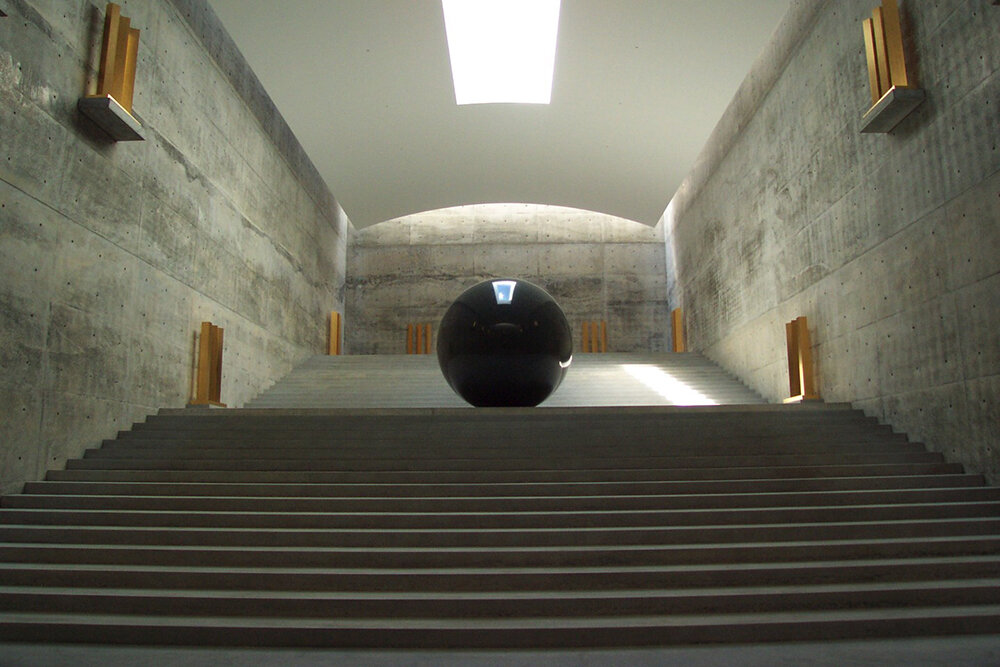
Tadao Ando’s signature architectural language, exposed concrete, appears in its most refined form at the Chichu Art Museum. The smooth concrete walls, where even the formwork holes are precisely calculated, become massive canvases themselves. In the darkness of the underground, the cold, hard texture of the concrete transforms into a soft, warm surface the moment it meets light, imbuing the space with spirituality. Furthermore, the geometric elements—triangles, squares, and straight lines—maintaining order throughout the complex underground navigation. This rigorous geometric composition represents the pinnacle of minimalism, excluding all decorativeness so that visitors can focus solely on the light, the art, and their inner selves. It is the architect’s intention to build a perfectly controlled aesthetic utopia, disconnected from the chaos of the outside world.
④ Total Integration: The Essence of Site-Specific Art
The Chichu Art Museum rejects the concept of a museum as a “box for objects.” From the planning phase, the location, spatial dimensions, and light angles for the works of Monet, Turrell, and De Maria were planned as a single body with the architecture. Walter De Maria’s exhibition room is a massive sculpture in itself. The angle at which light from the ceiling illuminates the 2.2-meter diameter granite sphere and the gold-leafed wooden structures on the walls is a result of meticulous architectural calculation. James Turrell’s work also becomes one with the architectural openings, blurring the line between where architecture ends and art begins. This site-specific approach means the artworks cannot be moved elsewhere; they gain their full vitality only within this specific land and building on Naoshima. It demonstrates a realm where architecture is not a backdrop for art, but the art itself.
⑤ Sensory Transition via Extended Approaches and Circulation
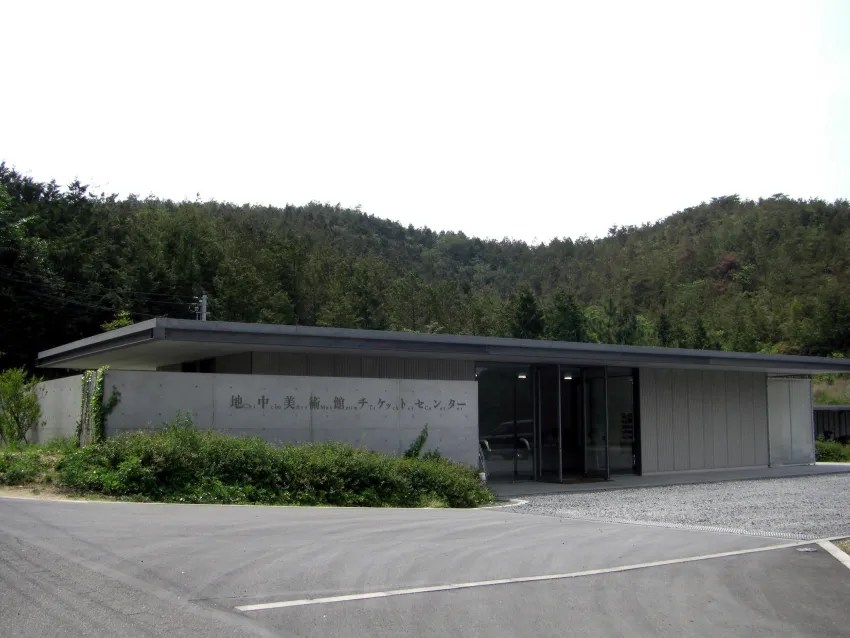
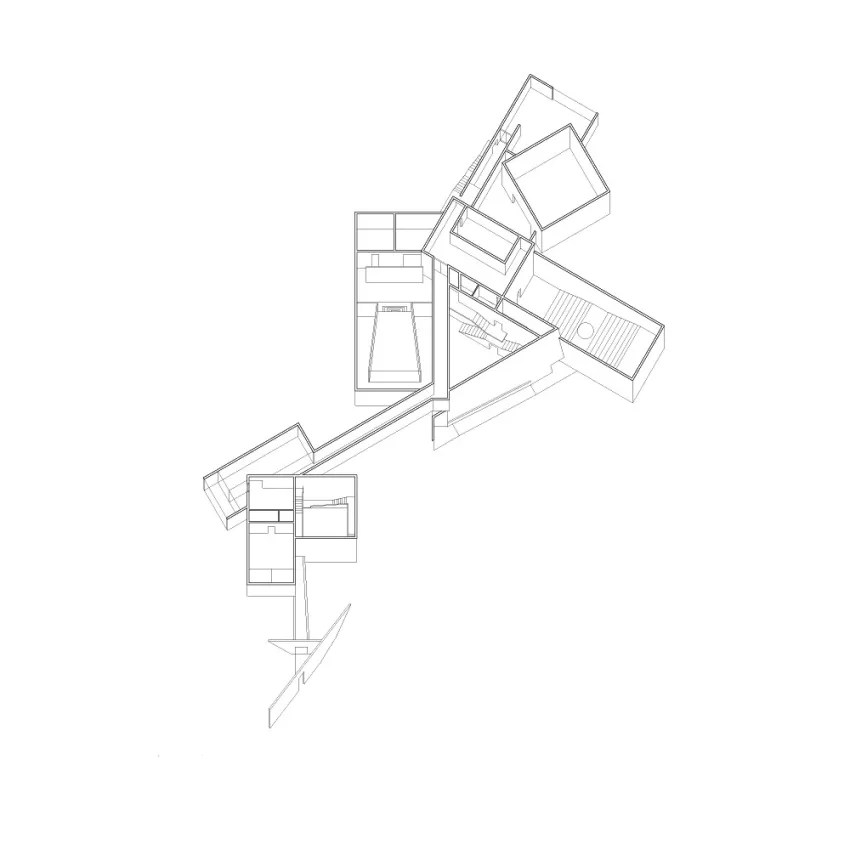
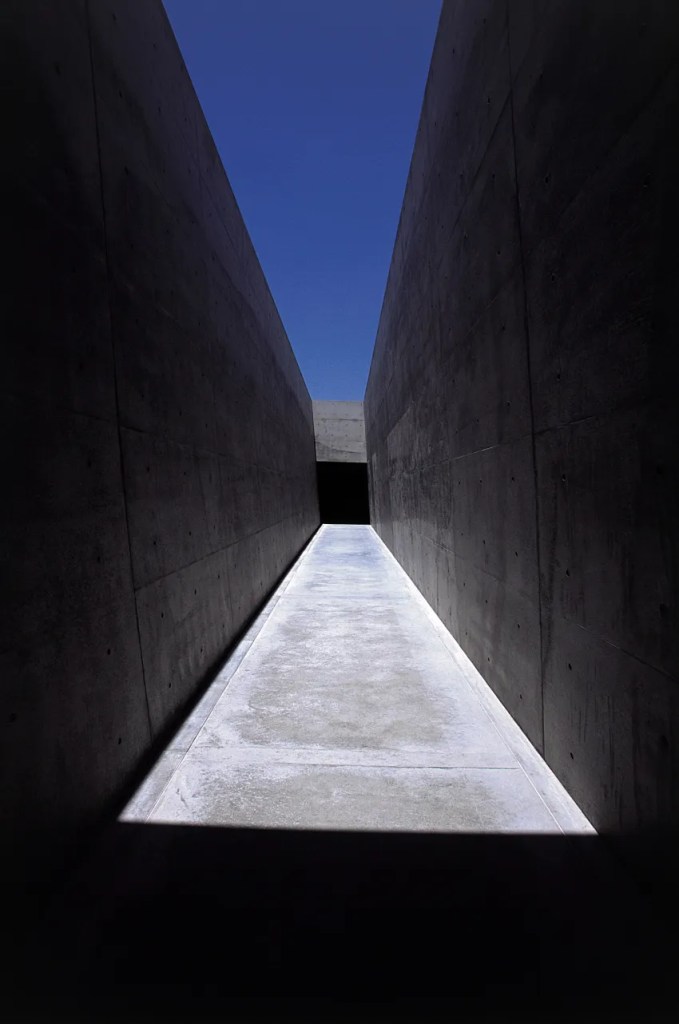
The journey from the museum entrance to the galleries is akin to a practitioner’s path to a temple. Ando intentionally placed long corridors, sloped stairs, and empty courtyards to purify the visitor’s senses. Entering the dark concrete passage after passing the “Chichu Garden” at the entrance cuts off the noise of the outside world, leaving one to focus only on their own footsteps and breathing. The triangular courtyards placed in between are open to the sky, allowing visitors to simultaneously feel the depth of the earth and the height of the heavens, regulating the rhythm of their senses. Through this static movement, visitors wash away the distractions of daily life and are psychologically prepared to feel an explosive sense of emotion when they finally encounter the artwork. This design, where the circulation itself possesses a narrative, is a perfect example of an architectural promenade and how space can act upon the human psyche.
Source Caption
The information in this post was compiled based on official data from Benesse Art Site Naoshima and the architectural philosophy of Tadao Ando.

Image Sources: Chichu Art Museum Official Website / Personal Photography.
 SAYU MAGAZINE
댓글 남기기