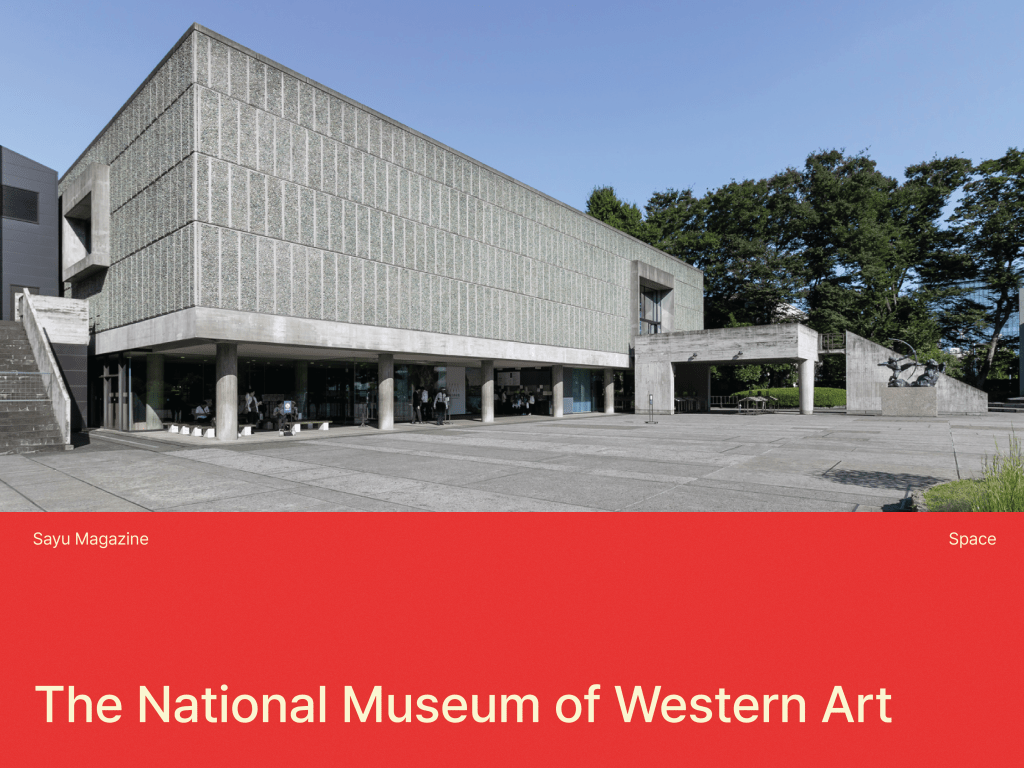
Info
Official Name: The National Museum of Western Art (NMWA)
Address: 7-7 Ueno-koen, Taito-ku, Tokyo, 110-0007, Japan
Classification: Art Museum (Modernist Architecture / UNESCO World Heritage Site)
Year of Completion: 1959 (Main Building)
Architect: Le Corbusier (In collaboration with Kunio Maekawa, Junzo Sakakura, and Takamasa Yoshizaka for execution)
Operating Days:
Tuesday – Sunday (Closed on Mondays; if Monday is a national holiday, the museum closes on the following Tuesday)
Operating Hours:
09:30 – 17:30 (Extended until 20:00 on Fridays and Saturdays)
Admission Fees:
500 JPY for the Permanent Collection (Approx. 4,500 KRW / 3.30 USD) / 250 JPY for College Students / Free for high school students and below, and seniors aged 65+. (Special exhibitions require separate tickets.)
Visiting Tips:
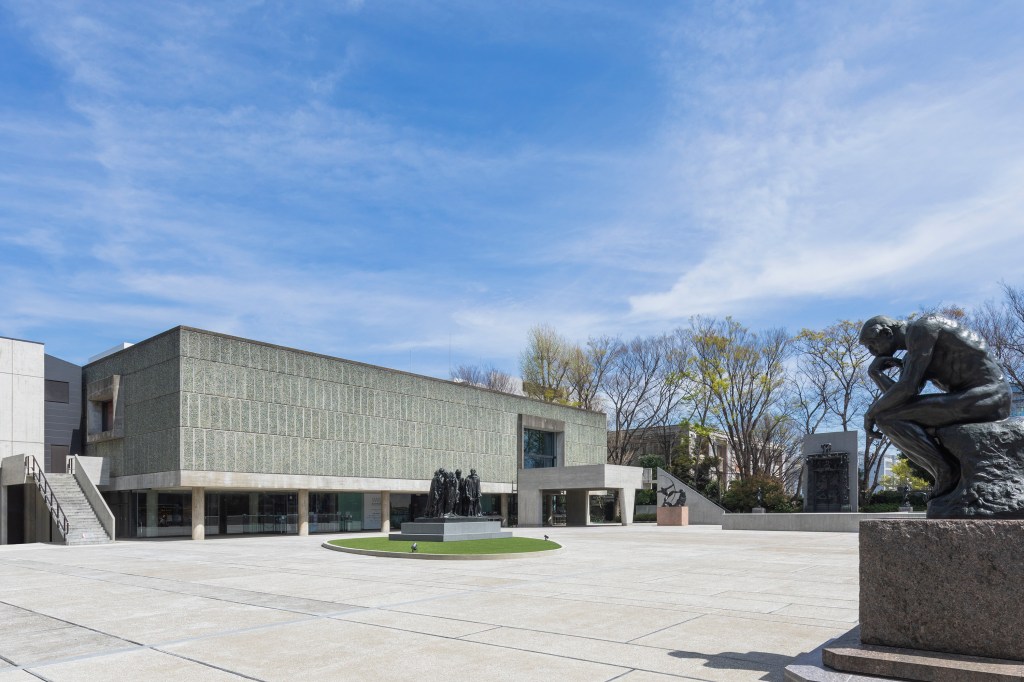
Rodin’s iconic sculptures, including “The Thinker” and “The Gates of Hell” in the front garden, can be viewed for free. Inside, pay close attention to the “19th Century Hall” to observe how natural light shifts throughout the day.
Official Links
Introduction
The National Museum of Western Art in Tokyo stands as a monumental landmark of 20th-century Modernism and remains the only architectural work by the legendary Le Corbusier in the Far East. The genesis of this building is deeply intertwined with post-war history. It was constructed to house the “Matsukata Collection”—a vast array of Western art masterpieces seized by the French government after World War II. The collection was returned to Japan under the condition that a dedicated museum be built by a French architect, leading to Le Corbusier’s historic commission.
In 1955, Le Corbusier visited the Ueno Park site for just eight days, yet he left an indelible mark by applying his lifelong philosophy of the “Museum of Unlimited Growth.” At first glance, the museum appears as a stoic, heavy concrete box. However, the interior reveals a dynamic orchestration of space. Corbusier intended for visitors to enter a central hall and move in a spiral fashion, allowing the gallery to expand outward as the collection grew. This design was not merely functional but aimed to provide a sanctuary for artistic meditation, away from the urban bustle.
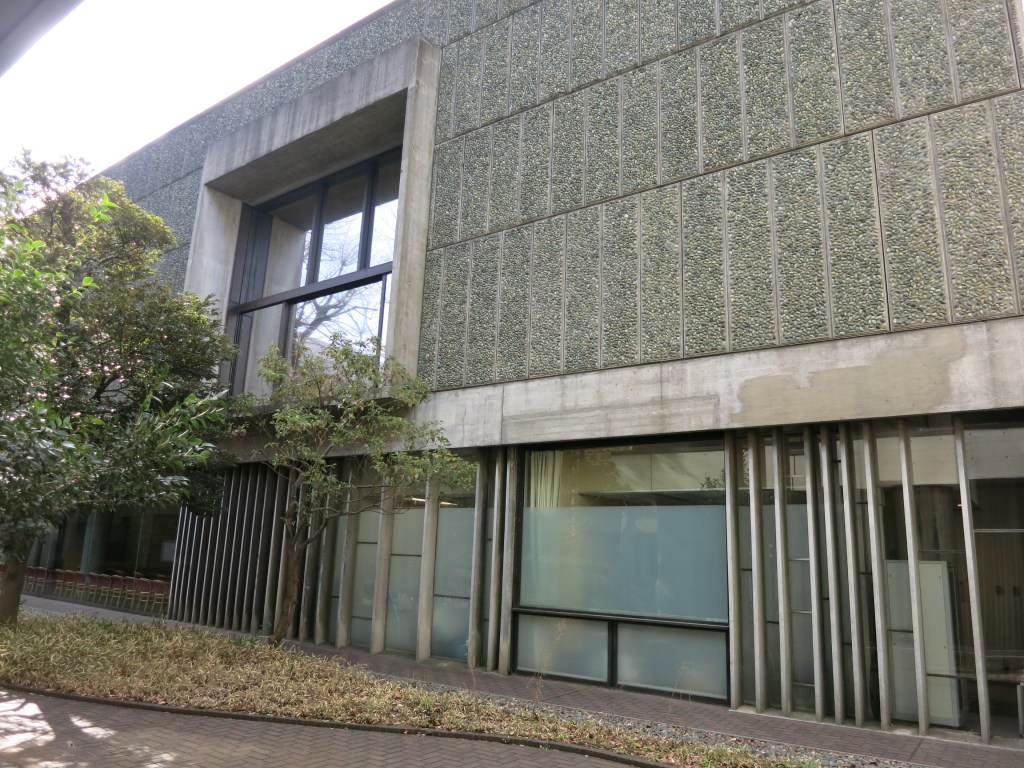
The building’s completion in 1959 introduced the aesthetic of “Béton brut” (exposed concrete) to Japan, fundamentally altering the trajectory of Japanese modern architecture. Under the guidance of his Japanese disciples—Maekawa, Sakakura, and Yoshizaka—the project became a bridge between Western modernism and Eastern sensibilities. In 2016, its global significance was formally recognized when it was designated a UNESCO World Heritage Site, celebrated as a masterpiece that contributed to the “Modern Movement.”
Architectural History
1954: The Japanese government decides to build a museum to receive the returned Matsukata Collection.
1955: Le Corbusier visits Japan to inspect the site and begins the basic design.
1958: Construction of the Main Building commences.
1959: Completion and official opening of the Main Building.
1979: The Annex is added, designed by Le Corbusier’s student, Kunio Maekawa.
1997: Completion of the Special Exhibition Wing.
1998: Seismic retrofitting and restoration of the Main Building are completed.
2016: Designated as a UNESCO World Heritage Site as part of “The Architectural Work of Le Corbusier.”
2022: Reopened after a major renovation that restored the front garden to its original 1959 design.
Architectural Features
① The Museum of Unlimited Growth
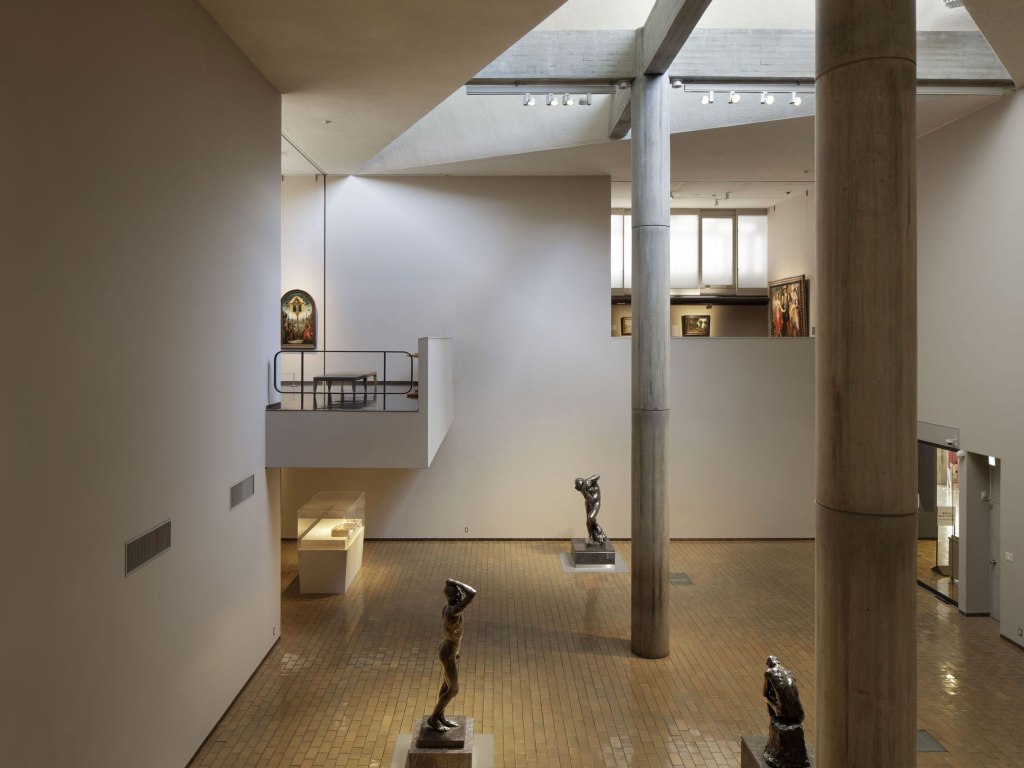
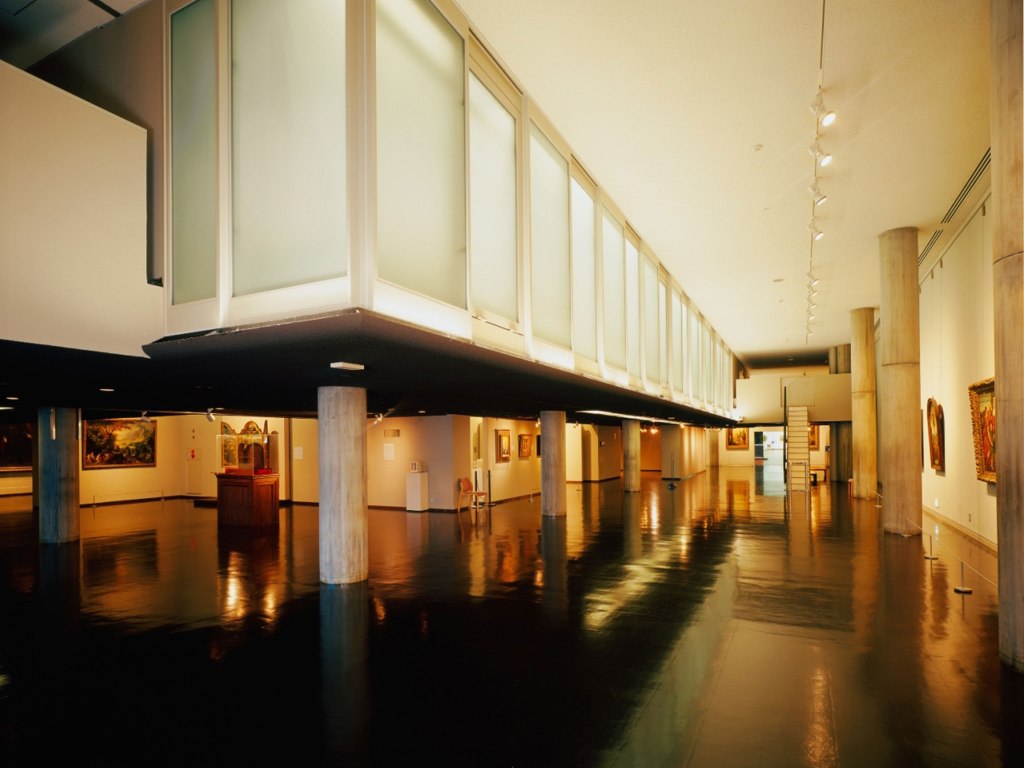
Le Corbusier envisioned a museum that could evolve alongside its collection. He proposed a square, spiral plan where galleries could be added to the outer perimeter as needed, theoretically allowing for “unlimited growth.” The NMWA is one of only three museums in the world (alongside those in Ahmedabad and Chandigarh) where this concept was realized. Starting from the central “19th Century Hall,” the visitor moves through a sequence of spaces that feel both contained and infinite, symbolizing architecture as a living, breathing organism.
② The Pilotis: Liberating the Ground Plane
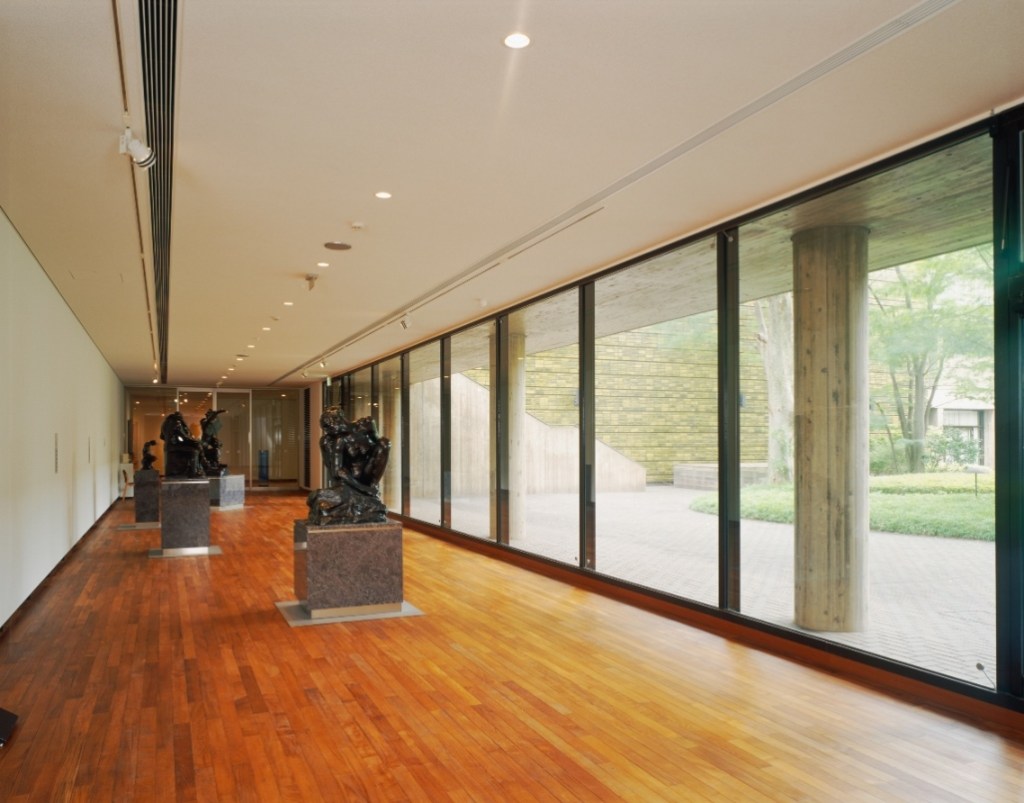
The ground floor of the Main Building is supported by thick, circular concrete columns known as “Pilotis.” This is a core tenet of Le Corbusier’s Five Points of Architecture. By lifting the mass of the building, the architect returns the ground to the public, creating an open plaza. This design blurs the boundary between Ueno Park’s greenery and the museum’s interior, inviting the city into the heart of the structure. The rhythmic placement of these columns provides a sense of lightness to the otherwise massive concrete volume.
③ The Modulor System
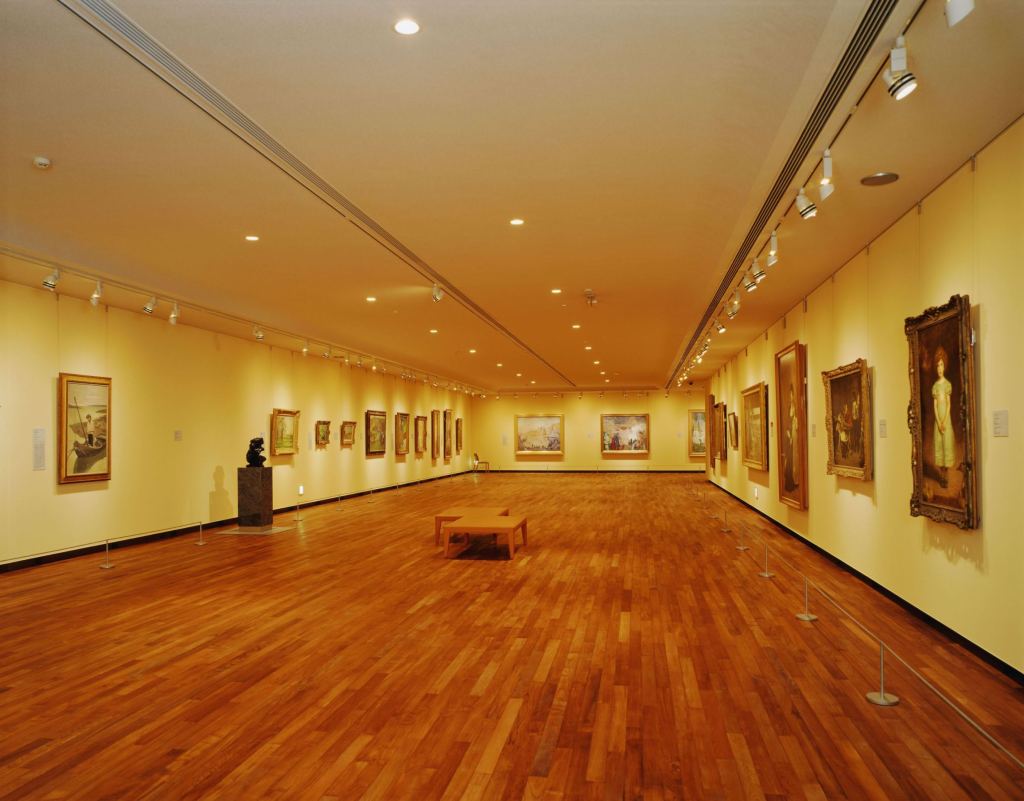
Every dimension of the museum is dictated by the “Modulor”—an anthropometric scale of proportions developed by Le Corbusier based on the human body and the Golden Ratio. From the height of the ceilings to the width of the corridors, the space is engineered to feel inherently “right” to the human occupant. This mathematical harmony ensures that the monumental concrete environment remains intimate and comfortable, aligning the scale of fine art with the scale of the human viewer.
④ Promenade Architecturale (Architectural Promenade)
In place of traditional staircases, Le Corbusier utilized a “Ramp” to connect different levels. He coined this the “Architectural Promenade.” The ramp forces a slower pace, encouraging visitors to experience the space as a shifting sequence of perspectives. As one ascends, the view of the 19th Century Hall changes dynamically, revealing the interplay of light and shadow. This movement turns the act of walking through the building into a cinematic experience, where the architecture itself becomes part of the art.
⑤ Natural Light and the Triangular Skylights
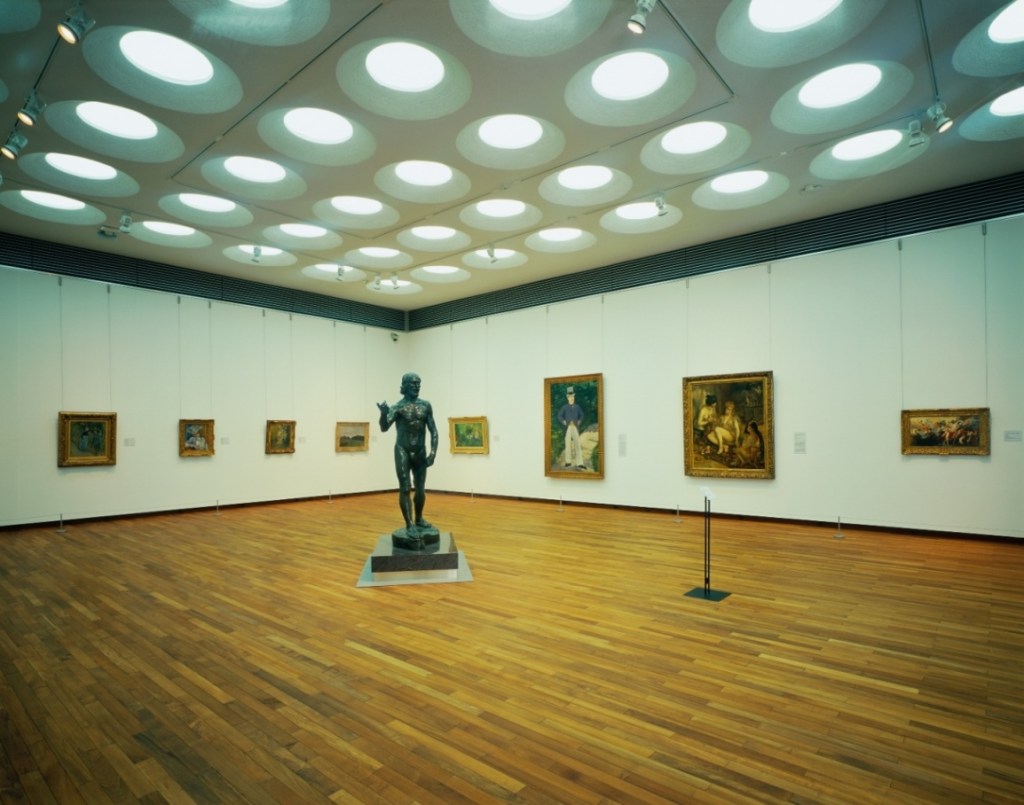
The mastery of light is perhaps the museum’s most poetic feature. The ceiling of the Main Building features distinct, triangular skylight monitors designed to capture and diffuse northern light. While modern conservation needs have led to the use of artificial light, the original intent was to bathe the galleries in soft, natural luminescence. The geometry of the ceiling creates a dramatic “fifth facade,” reminding visitors of the cosmic relationship between the sun, the structure, and the masterpieces within.
Source Caption
his article was compiled based on official data from the National Museum of Western Art (NMWA), the UNESCO World Heritage Centre, and the Fondation Le Corbusier archives.
 SAYU MAGAZINE
댓글 남기기